
Address: P. O. Box 1457, Los Gatos,CA 95031
TEL: 800-323-3956/408-356-4186
FAX: 408-358-3799
Mobile: 408-858-4528
URL: www.dsmith.org
Email: doug@dsmith.org
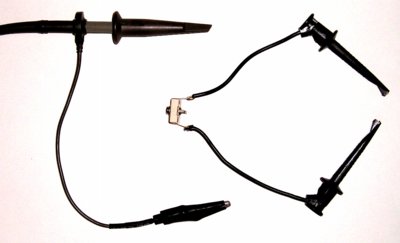
Abstract: Probing can have significant effects onthe signals being measured. One of these effects, resonance between probe input capacitanceand lead inductance, can be simulated with a trimmer capacitor and its connectingleads. Such a "tuned probe simulator" can both provide insight on how probingaffects signals and help troubleshoot circuit problems as well. Tuned probesimulators for passive and active probes are discussed.
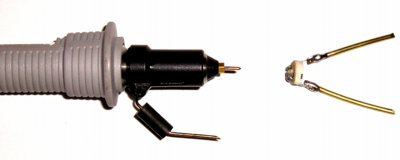
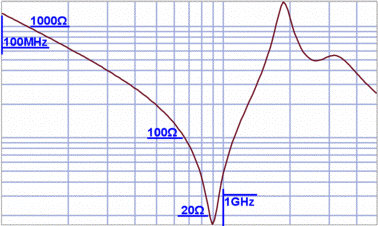
Summary and Conclusion: Probing a signal can affect itin several ways. One way this can happen is the resonance of probe input capacitance withthe connection inductance resulting in a very low probe input impedance atthe resonant frequency. Tuned probe simulators can be useful both as a troubleshootingtool to investigate this effect as well as to predict possible loading froma probe being considered for purchase.
History: Originally, Henry Ott, describeda "tuned probe tester" years ago in his EMC seminars. This article takesthe concept further in applying the principle to active probes and its usein predicting circuit response to a probe before it it purchased.
Other articles on this website covering probing effects include:
Equipment used in this article includes: